If you have ever looked into getting your house cleaned, you have probably seen both terms: soft washing and pressure washing. They sound similar, and a lot of people use them interchangeably. But they are two different cleaning methods, and using the wrong one on the wrong surface is one of the most common ways homes get damaged.
Here is a plain-language breakdown of the difference, and how to know which one your property needs.
What is pressure washing?
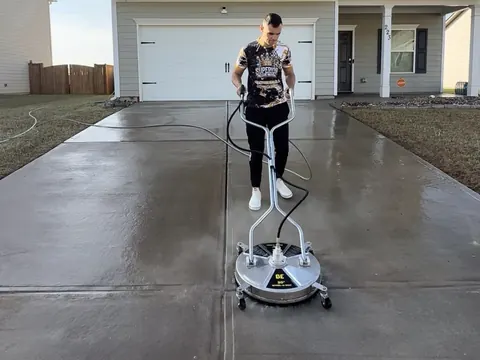
Pressure washing uses high-pressure water to blast dirt, grime, and stains off a surface. The force of the water does the cleaning.
That works well on hard, durable surfaces that can take it, like:
- Concrete driveways and sidewalks
- Exposed aggregate
- Many patios and pool decks
- Curbs, dumpster pads, and commercial concrete
Even on concrete, technique matters. Holding a narrow spray tip too close can etch the surface or leave light and dark “zebra stripes.” That is why professionals use surface cleaning equipment that keeps an even distance from the concrete. You can read more on our driveway cleaning page.
What is soft washing?
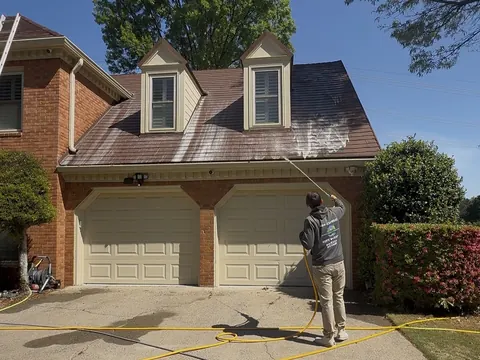
Soft washing uses low pressure, about the same as a garden hose, combined with a professional cleaning solution. The solution breaks down dirt and kills the algae, mildew, and mold growing on the surface. Then everything is rinsed away gently.
Instead of force, soft washing relies on the cleaning solution and time. That makes it the right choice for surfaces that can be damaged by high pressure:
- Vinyl siding
- Painted wood and fiber cement siding
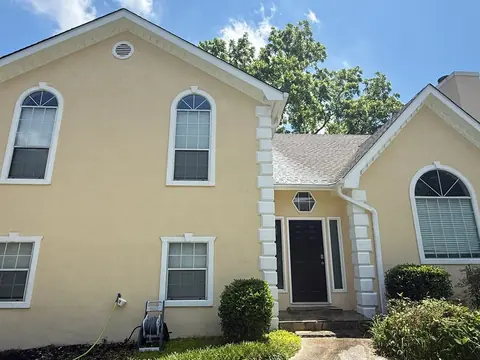
- Stucco and EIFS
- Brick and older masonry
- Asphalt shingle roofs
- Soffits, fascia, and trim
Why high pressure damages siding and roofs
High pressure on the wrong surface can cause real, expensive problems:
- Vinyl siding can crack, warp, or come loose, and water can be forced behind the panels where it leads to moisture problems.
- Painted surfaces can have their paint stripped away.
- Brick and mortar can be etched or loosened, especially on older homes.
- Stucco can be gouged, and water can get behind it.
- Shingle roofs can lose the protective granules that help them last.
There is another problem, too. Pressure alone often knocks off the visible growth but leaves the roots of algae and mildew behind. That is why a house that was “pressure washed” can turn green again quickly.
Why soft washing lasts longer
Because soft washing kills algae and mildew instead of just spraying it off, the surface tends to stay cleaner longer. In a humid climate like North Georgia, where growth comes back fast, that makes a real difference.
It is also why soft washing is the standard method for roof cleaning. Those black streaks on shingles are living algae, and they need to be killed, not blasted.
So which does your home need?
Most homes need both, used on different surfaces:
| Surface | Best method |
|---|---|
| Vinyl, painted, or fiber cement siding | Soft wash |
| Stucco and brick | Soft wash |
| Shingle, tile, slate, or metal roof | Soft wash |
| Concrete driveway and sidewalks | Pressure washing (surface cleaning) |
| Wood deck | Controlled, wood-safe pressure |
| Pavers and flagstone | Adjusted pressure for the material |
A good exterior cleaning company will walk your property and match the method to each surface. If someone plans to hit your siding or roof with high pressure, that is a red flag.
The bottom line
Pressure washing and soft washing are both useful tools. The key is using each one in the right place. Soft washing protects your siding and roof while cleaning them more thoroughly, and pressure washing gets concrete truly clean.
If you are not sure what your home needs, we are happy to take a look. Learn more about our house washing and soft washing services, or request a free quote below.